The textile industry has evolved significantly in recent years due to digital transformation, globalization, and changing customer expectations. Today, textile companies must manage large volumes of clients, suppliers, orders, and distribution channels while maintaining high levels of efficiency and customer satisfaction.
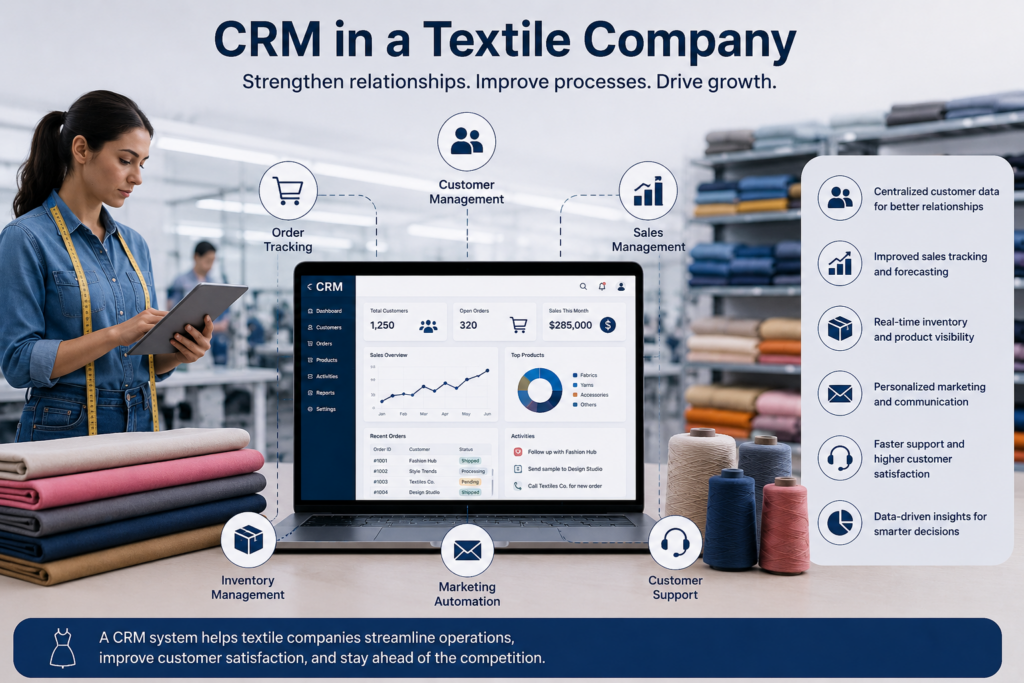
One of the most effective technologies helping textile businesses achieve these goals is a Customer Relationship Management (CRM) system. A CRM platform allows textile companies to centralize customer information, automate processes, improve communication, and increase sales performance.
This article explains how a CRM system would work in a textile company and why it has become a key tool for growth and competitiveness.
What Is a CRM System?
A CRM system is software designed to help businesses manage relationships with customers, suppliers, distributors, and sales teams. It stores and organizes important data such as:
- Customer contact information
- Purchase history
- Sales opportunities
- Communication records
- Inventory and order details
In a textile company, CRM software can connect departments like sales, production, marketing, and customer service into a single digital platform.
Why Textile Companies Need CRM Software
Managing Large Customer Networks
Textile businesses often work with:
- Fashion brands
- Retail stores
- Manufacturers
- International distributors
Handling all these relationships manually can become difficult and inefficient. CRM systems simplify communication and improve organization.
Increasing Competition in the Textile Industry
The textile market is highly competitive. Companies need to provide:
- Faster responses
- Personalized customer service
- Better product tracking
- Efficient order management
A CRM system helps companies meet these expectations while improving productivity.
How CRM Would Be Used in a Textile Company
1. Customer Management
Centralized Customer Database
A textile company can store all customer information in one place, including:
- Contact details
- Previous orders
- Preferred fabrics and materials
- Payment history
- Delivery preferences
This allows sales teams to quickly access customer profiles and provide more personalized service.
Improved Customer Relationships
CRM systems help companies maintain strong relationships by tracking:
- Emails and calls
- Complaints and requests
- Follow-up meetings
- Purchase behavior
As a result, textile companies can improve customer loyalty and retention.
2. Sales and Order Tracking
Monitoring Sales Opportunities
Sales representatives can use CRM software to:
- Track leads and potential clients
- Manage quotations
- Monitor negotiations
- Follow order progress
This improves the efficiency of the sales process and increases conversion rates.
Real-Time Order Updates
CRM systems can provide real-time information about:
- Production status
- Shipping updates
- Delivery schedules
Customers receive faster communication and greater transparency.
3. Inventory and Product Management
Connecting CRM with Inventory Systems
A textile company often handles:
- Fabrics
- Clothing materials
- Finished products
- Seasonal collections
CRM software can integrate with inventory systems to help teams know:
- Which products are available
- Which materials are running low
- Which items are best sellers
This reduces delays and improves operational planning.
Demand Forecasting
By analyzing customer behavior and historical data, CRM systems can help predict:
- Seasonal demand
- Popular colors and styles
- Future purchasing trends
This allows textile companies to optimize production and reduce waste.
4. Marketing Automation
Personalized Marketing Campaigns
CRM systems allow textile businesses to create targeted marketing campaigns based on:
- Customer preferences
- Industry sector
- Purchase history
- Geographic location
For example, a textile company can send:
- New collection announcements
- Special discounts
- Product recommendations
to the right customers automatically.
Email and Communication Automation
CRM platforms can automate:
- Promotional emails
- Follow-up messages
- Customer surveys
- Event invitations
This saves time while improving customer engagement.
5. Customer Service and Support
Faster Problem Resolution
Textile companies frequently deal with:
- Delivery issues
- Product defects
- Order changes
- Return requests
A CRM system records all interactions, allowing support teams to respond quickly and efficiently.
Better Customer Satisfaction
When customer service teams have access to complete information, they can provide:
- Faster solutions
- Personalized assistance
- More professional communication
This improves the company’s reputation and customer trust.
Benefits of CRM in the Textile Industry
1. Improved Efficiency
CRM systems automate repetitive tasks, reducing manual work and saving time.
2. Increased Sales
By improving lead management and customer communication, companies can generate more sales opportunities.
3. Better Decision-Making
CRM analytics provide valuable insights into:
- Sales performance
- Customer trends
- Market behavior
Managers can make smarter business decisions using real-time data.
4. Stronger Customer Loyalty
Personalized experiences help textile companies build long-term relationships with clients.
Challenges of Implementing CRM in Textile Companies
Although CRM systems offer many advantages, implementation can also present challenges.
Employee Training
Workers must learn how to use the new system effectively.
Integration with Existing Software
Textile companies may need to connect CRM platforms with:
- ERP systems
- Inventory software
- Accounting tools
Initial Investment
CRM implementation may require:
- Software licenses
- Customization
- Technical support
However, the long-term benefits usually outweigh the costs.
Popular CRM Platforms for Textile Companies
Many textile businesses use CRM platforms such as:
- Salesforce
- HubSpot
- Microsoft Dynamics 365
- Zoho CRM
These platforms offer tools for:
- Sales automation
- Marketing management
- Data analytics
- Customer service
The Future of CRM in the Textile Industry
The future of CRM in textile companies will be driven by technologies like:
- Artificial Intelligence (AI)
- Predictive analytics
- Automation
- Cloud computing
These innovations will allow companies to better understand customer behavior and improve operational efficiency.
Conclusion
A CRM system can completely transform the way a textile company operates. From managing customers and tracking orders to automating marketing and improving customer service, CRM technology helps textile businesses become more efficient, competitive, and customer-focused.
As the textile industry continues to evolve, companies that adopt advanced CRM solutions will be better prepared to meet market demands, increase profitability, and build stronger relationships with customers worldwide.